Using a pickup truck to tow trailers, transport equipment, or haul loads for commercial clients is a common way for independent contractors, hotshot haulers, and tradespeople to earn substantial income. However, using your personal truck for towing business loads introduces significant insurance complications.
A standard personal auto insurance policy usually explicitly excludes damages caused while performing commercial towing or transport work. If an accident occurs while pulling a heavy load for pay, relying on personal insurance can lead to denied claims, thousands of dollars in vehicle and cargo damage, and personal lawsuits.
In this guide, we compare commercial auto insurance against personal auto insurance for pickup truck towing, detail weight limits, and explain when a commercial policy becomes mandatory.
The Key Difference: Personal Use vs. Commercial Towing
The dividing line between a personal auto policy and a commercial auto policy comes down to intent and weight:
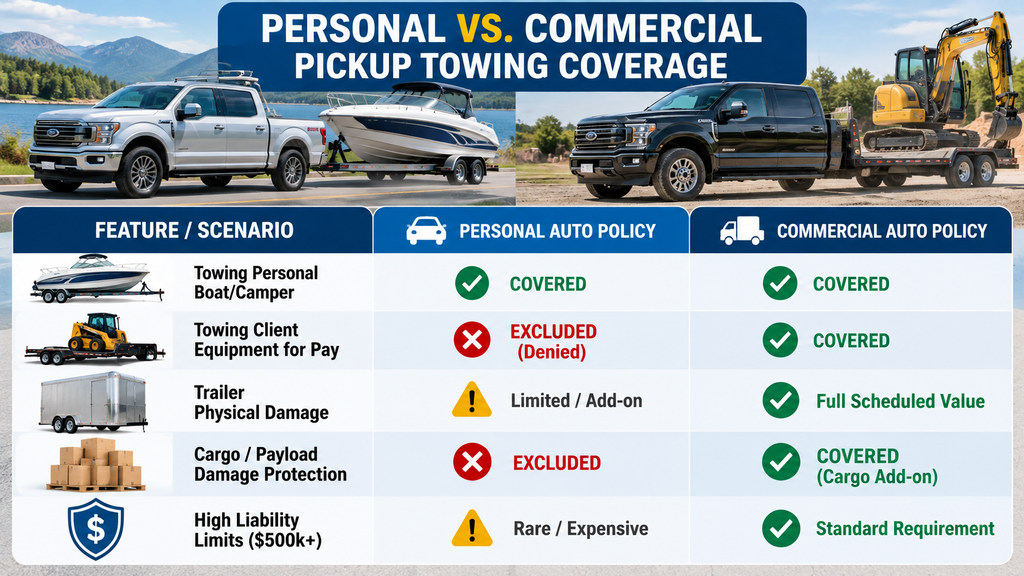
- Personal Auto Policy: Protects your pickup truck when towing personal trailers (such as a personal camper, boat, or recreational utility trailer used for non-business trips).
- Commercial Auto Policy: Required the moment your pickup truck is used to haul goods, cars, machinery, or cargo for business profit or compensation.
3 Triggers That Require Commercial Insurance for Your Pickup Truck
If any of the following conditions apply to your towing operations, a standard personal auto policy will not provide legal or financial protection:
1. Hauling Cargo or Equipment for Compensation
If you receive direct payment or business compensation for towing a trailer, transporting vehicles (hotshot hauling), or moving heavy landscaping/construction gear, insurance adjusters classify your truck as a commercial vehicle.
2. Vehicle Weight and GVWR Thresholds
Pickup trucks rated over 10,000 lbs. Gross Vehicle Weight Rating (GVWR)—such as Ford F-250/F-350, Chevy Silverado 2500/3500, or RAM 2500/3500—often cross into commercial policy territory when combined with heavy tandem-axle trailers (Gross Combination Weight Rating over 26,000 lbs.).
3. Business Registration & DOT/MC Numbers
If your truck is registered under a business entity (LLC, Corporation) or carries USDOT / Federal Motor Carrier numbers on the side, personal insurance policies will automatically reject coverage claims.
What Coverage Do You Need for Pickup Truck Towing?
When setting up a commercial policy for towing, ensure your insurance agent includes these critical coverage components:
- Commercial Auto Liability: Covers bodily injury and property damage you cause to others while towing. Most commercial contracts require minimum liability limits of $500,000 to $1,000,000.
- Trailer Interchange or Non-Owned Trailer Coverage: Protects trailers that you do not own but are pulling for business purposes.
- Motor Truck Cargo Insurance: Pays for loss or damage to the specific equipment, vehicles, or materials loaded onto your trailer during transport.
- Physical Damage (Collision & Comprehensive): Covers crash repairs, theft, or weather damage to both your pickup truck and attached utility trailers.
How Much Does Commercial Pickup Truck Towing Insurance Cost?
Insurance rates for commercial pickup trucks vary depending on cargo type, haul radius, and driving record:
- Light Commercial Towing (Landscaping / Trades): $150 to $350 per month ($1,800 – $4,200 annually).
- Hotshot Hauling / Interstate Transport: $400 to $900+ per month ($4,800 – $10,800 annually) due to higher liability requirements ($750,000+ DOT minimums) and long-distance road exposure.
Frequently Asked Questions (FAQ)
Can I just add a business use endorsement to my personal truck insurance?
If you only occasionally haul light tools or small utility trailers for your own trade (e.g., a solo carpenter), a business-use endorsement may suffice. However, if you perform towing for hire or pull heavy commercial trailers, a dedicated commercial policy is required.
Does personal car insurance cover the trailer I am pulling?
Personal policies typically extend basic liability coverage to light personal utility trailers while attached to your vehicle. However, physical damage to the trailer itself or commercial cargo on top requires dedicated commercial coverage.
What happens if I get in an accident towing for business on a personal policy?
The insurance company will conduct a loss investigation. If they determine the towing was for business or compensation, they will issue a formal claim denial, leaving you personally liable for all damages and injuries caused.
Summary & Recommendation
Driving a pickup truck for commercial towing without proper insurance is a high-risk liability. To safeguard your business assets:
- Calculate your combined vehicle and trailer weight (GCWR).
- Contact a commercial insurance broker to request quotes tailored to your specific towing activities.
- Ensure your policy includes appropriate cargo and trailer damage limits before accepting paid towing loads.