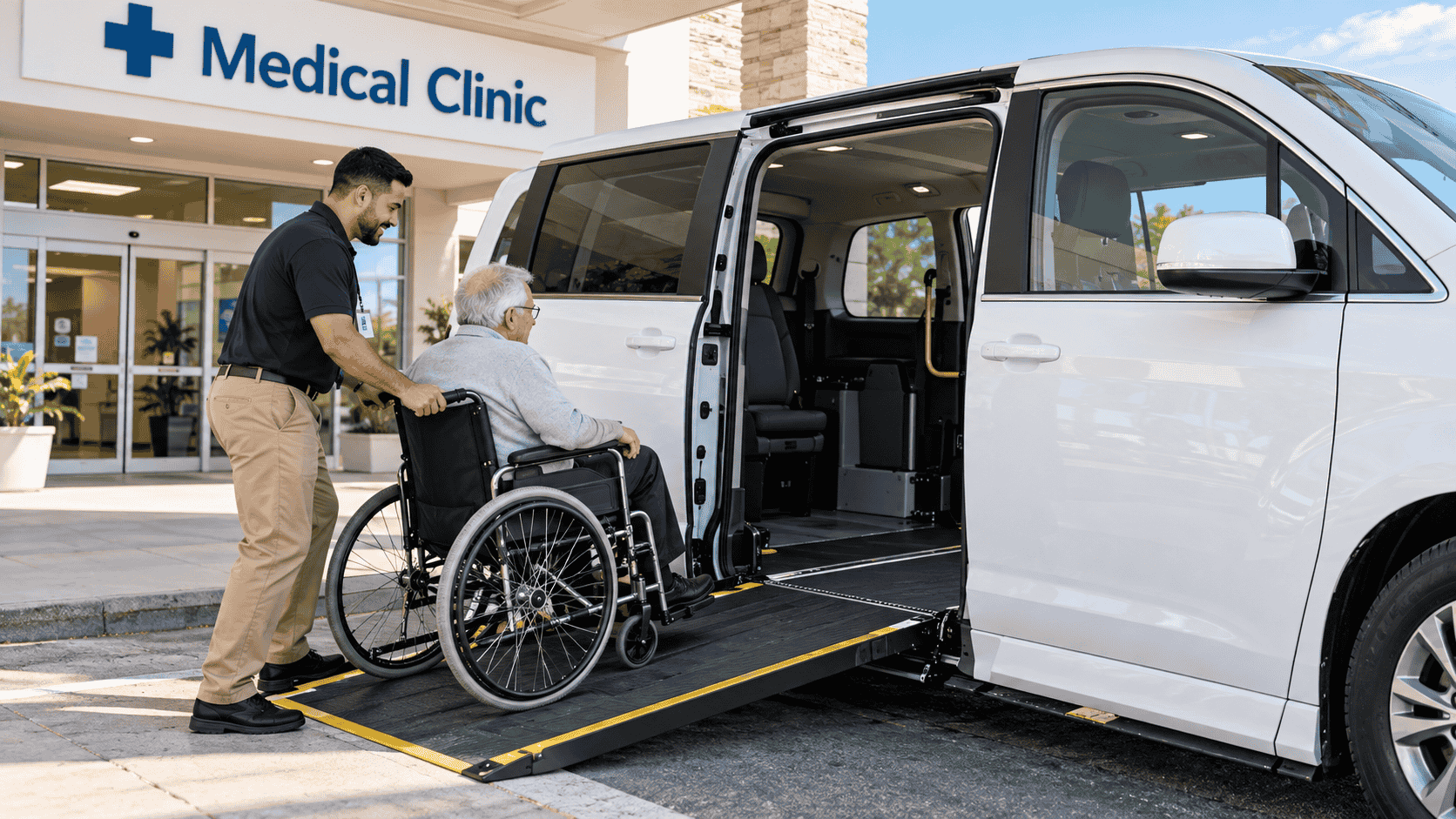
Operating a Non-Emergency Medical Transportation (NEMT) business or driving a wheelchair-accessible van for medical transport contracts is a rapidly growing market in the United States. NEMT providers transport patients to doctor appointments, dialysis treatments, and physical therapy sessions.
Because NEMT drivers transport vulnerable passengers, insurance requirements are far stricter than standard rideshare or food delivery services. Personal auto insurance policies strictly exclude NEMT activities, making specialized commercial NEMT insurance legally mandatory.
In this comprehensive guide, we outline essential NEMT insurance requirements, state liability limits, optional coverages, and average policy costs.
Mandatory NEMT Insurance Coverages & Limits
To contracts with state Medicaid agencies, brokers (such as Modivcare or MTM), or private healthcare facilities, NEMT operators must meet strict commercial insurance minimums.
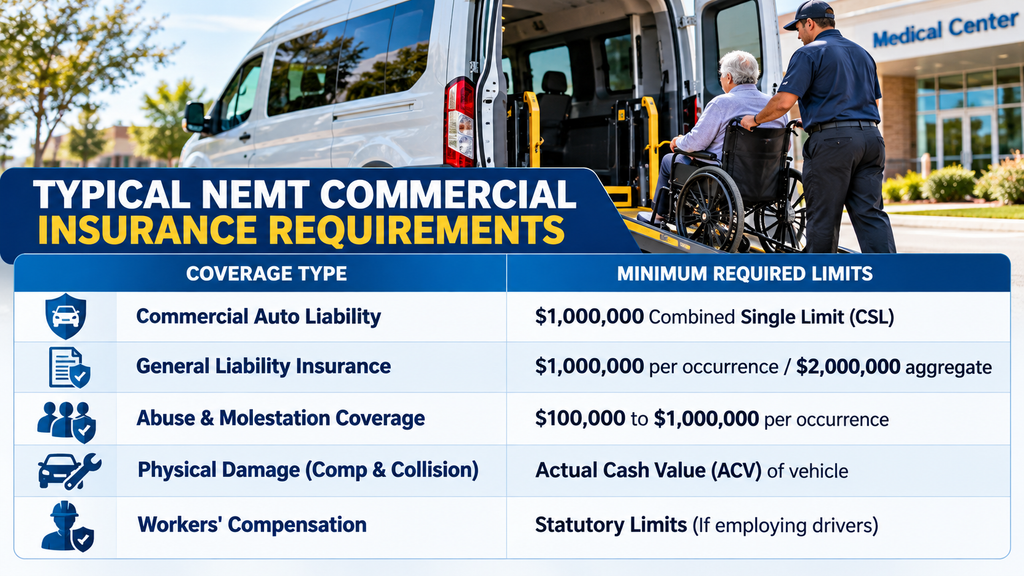
3 Core Insurance Pillars Every NEMT Provider Needs
1. Commercial Auto Liability ($1,000,000 Minimum)
Commercial auto liability covers bodily injury and property damage caused to third parties during transit. Most state Medicaid programs and transportation brokers require a minimum $1,000,000 Combined Single Limit (CSL) policy for each NEMT vehicle in service.
2. General Liability & “Loaded / Unloaded” Coverage
Standard commercial auto insurance only covers passengers while they are inside the vehicle. However, NEMT drivers often assist patients in wheelchairs or gurneys from their front door into the vehicle.
- Loaded/Unloaded Endorsement: Crucial coverage that protects your business if a patient falls or sustains an injury while being loaded into or unloaded from the vehicle.
3. Professional Liability (Errors & Omissions)
Protects your NEMT company against claims alleging negligence, improper patient handling, or failure to deliver patients to medical appointments on time for critical care.
NEMT Vehicle Requirements & Equipment Standards
Insurance underwriters evaluate the safety features of your NEMT fleet before issuing a policy. To qualify for commercial coverage, vehicles typically must meet these standards:
- Wheelchair Ramps & Lifts: Must be ADA-compliant and professionally installed with certified tie-down restraint systems (e.g., Q’Straint).
- Vehicle Age & Mileage: Most insurance carriers require NEMT vehicles to be under 10–12 years old with under 150,000–200,000 miles.
- Safety Equipment: Mandatory onboard equipment includes first-aid kits, biohazard spill kits, fire extinguishers, and GPS tracking/dashcam devices.
How Much Does NEMT Insurance Cost per Month?
Due to higher liability exposure and specialized passenger care, NEMT insurance is more expensive than standard cargo van or rideshare insurance.
- Single Van/Driver (Wheelchair Accessible): $350 to $700 per month ($4,200 to $8,400 annually).
- Sedan/Standard Passenger Car (Ambulatory Only): $250 to $450 per month ($3,000 to $5,400 annually).
Primary cost drivers include driver MVR records, passenger transport type (ambulatory vs. stretcher/wheelchair), and urban vs. rural operating zones.
Frequently Asked Questions (FAQ)
Can I drive for NEMT using my personal car insurance policy?
No. Personal auto policies explicitly exclude medical transport for hire. Operating an NEMT business on a personal policy will lead to immediate claim denials and policy termination.
Do insurance companies require NEMT driver training certifications?
Yes. Most commercial NEMT insurers mandate that all drivers complete certified training courses, including CPR/First Aid certification, PASS (Passenger Assistance Safety and Sensitivity), and defensive driving programs.
What is the difference between ambulatory and non-ambulatory NEMT insurance?
- Ambulatory: Passengers can walk on their own or with minimal assistance (lower insurance rates).
- Non-Ambulatory: Passengers require wheelchairs, motorized scooters, or stretchers, requiring specialized lift equipment and carrying higher insurance liability rates.
Summary & Action Checklist
Starting an NEMT operation requires strict compliance and comprehensive coverage. To secure valid NEMT insurance:
- Confirm the minimum liability requirements of your local Medicaid broker (e.g., $1M CSL).
- Ensure your vehicles meet ADA accessibility and safety standards.
- Obtain quotes from specialized commercial brokers (e.g., Progressive Commercial, National General, or PRIME Insurance).